


Treadova Snow Traction Straps
Treadova Snow Traction Straps
Cleated straps that wrap your tire like heavy zip ties. Six per tire, on by hand, no jack.
Couldn't load pickup availability
Treadova Snow Traction Straps
What comes in each kit
What comes in each kit
12 straps covers two tires, 24 covers four, 48 covers two vehicles. Six straps per tire.
Cleated straps that cinch around your tire like heavy-duty zip ties. Thread each one through the gap between your wheel spokes, pull it tight, and the raised cleats bite into snow and ice where bare tread slips.
- Under 5 minutes per tire, with gloves on. No jack, and no driving onto a chain.
- Nothing to untangle. Each strap is separate, so you use as many as the job needs.
- Six straps per tire. Space them evenly around the wheel.
- Reusable. Release the buckle carefully instead of cutting the strap, and it's ready for the next storm.
Specs
- Material: double-tooth PE plastic
- Strap size: approx. 95 cm long × 2 cm wide × 1 cm thick (37 × ¾ × ⅜ in)
- Color: red or orange, shipped at random
- Fit: open-spoke wheels on most cars, SUVs, pickups and vans
- Tire widths: about 155 to 245 mm (the first number on your sidewall). Tall pickup tires like 265/70R17 are too big for the strap to close.
Use them like chains
Drive slowly (we recommend under 20 mph / 30 km/h), keep them for snow and ice, and take them off once you're back on clear pavement.
Check your wheel first
The straps thread through the openings between your wheel's spokes, so they need open-spoke wheels and room between the inside of the tire and the suspension. They won't fit solid wheels or wheels behind full hubcaps. To be sure, run a tape measure from a spoke gap, around the tire and back to the gap: under 85 cm and the strap will close.



Cleats where your tread runs out
Each strap carries rows of raised square cleats. Cinched across the tread, they press into packed snow and glazed ice and give a spinning tire hard edges to push against.
Worn tread, all-season tires, a steep driveway at 6 a.m.: that's the moment they're for.
On in the time it takes to warm up the car
-

1. Thread it
Pass the strap through an opening between your wheel's spokes and around the tire.
-

2. Cinch it
Feed the tail through the buckle and pull until the strap sits tight against the tread.
-

3. Space them out
Six per tire, evenly around the wheel. Roll forward a few feet to reach the part that was on the ground, then add the rest.


Made for the shoulder of the road
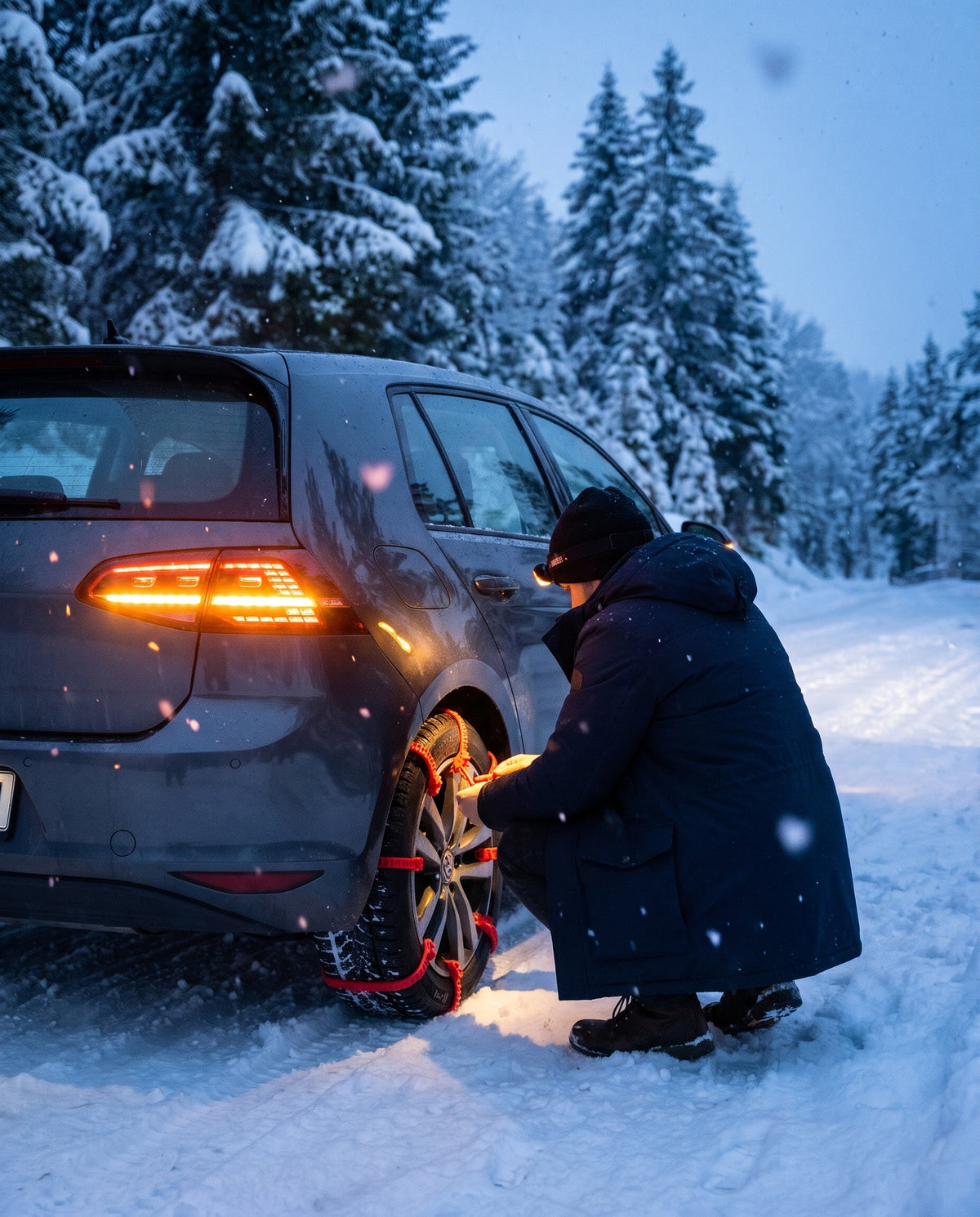
You rarely need traction in your driveway. You need it halfway up a pass with the hazards on, in gloves, in the dark. The straps are separate pieces with no chain to lay out, so you can fit them kneeling beside the wheel and keep moving.
Straps or steel chains?
Chains are the heavy-duty answer for long mountain stretches. Straps are the quick one: faster to fit, easier to store, and gentler to deal with on the roadside. One honest catch: they need open spokes to thread through.
| Treadova | Chains | |
|---|---|---|
No driving onto it to fit |
||
Nothing to untangle |
||
Use only as many as you need |
||
Fits solid or hubcap wheels |
Questions before winter
Will they fit my car?
They fit wheels with openings between the spokes that a strap can pass through, with room between the inside of the tire and the suspension. They won't fit solid wheels, or wheels behind full hubcaps. Look behind your wheel before you order.
How many do I need?
Six per tire. Put them on the drive wheels: the front pair on front-wheel drive, the rear pair on rear-wheel drive. All-wheel drive and 4x4s get the most grip with all four tires strapped, which is the 24-strap kit.
How fast can I drive with them on?
Slowly. We recommend under 20 mph (30 km/h). They're for getting through snow and ice, not for highway speed.
Can I leave them on when the road clears?
No. Take them off once you're back on clear pavement. Dry asphalt wears the cleats down fast and doesn't need them.
Do they count where chains are required?
That depends on where you drive. Some chain-control areas only accept specific traction devices, so check the local rules before you rely on straps to meet a requirement.
Shipping and returns
Delivery times and the return window are on our shipping policy and refund policy pages.